Interview Trends 2026: What to Expect
524 words · Reviewed for accuracy
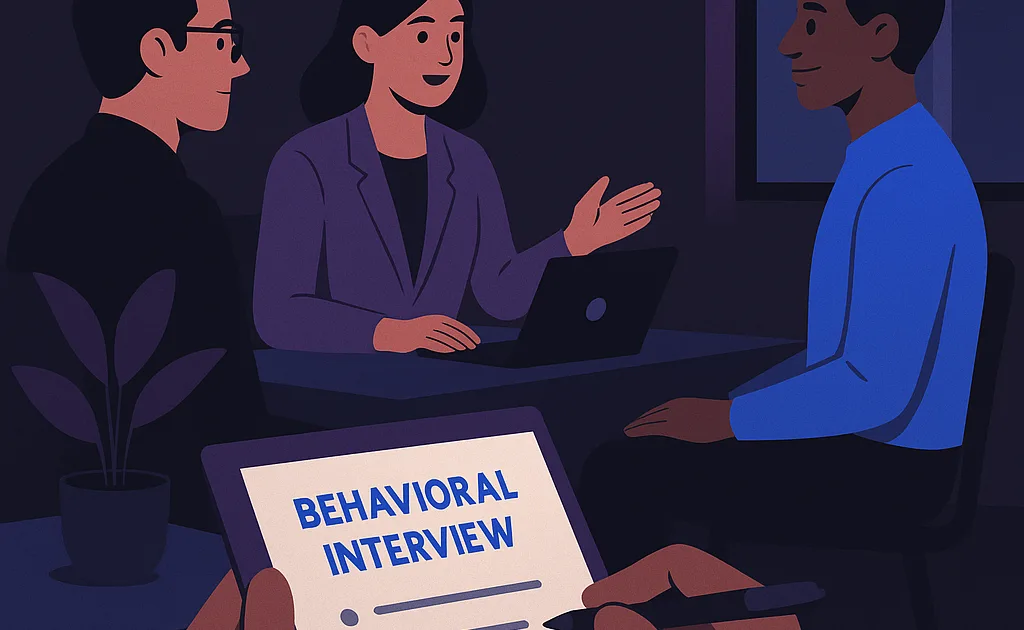
Interviewing in 2026 looks noticeably different from even a few years ago — not because the fundamentals changed (they haven't), but because the tooling, the formats, and employer expectations all shifted at once. Here's what's actually different this year, stated qualitatively and without the hype, so you can calibrate your prep to the room you're actually walking into.
The key idea: every trend below pushes in the same direction — interviews are getting better at measuring how you think, collaborate, and adapt, and worse at being gamed by memorisation. Preparation that builds real skill beats preparation that builds scripts.
The trends worth your attention
- AI on both sides of the table. Companies use AI for screening, scheduling, and assessments; candidates use it for prep. The arms race has made live, interactive evaluation more important — the AI-in-interviews overview goes deep on this.
- Skills over credentials. Work samples, take-homes, and live problem-solving keep gaining ground over pedigree screens. Portfolios and demonstrable craft matter more each cycle.
- Structured everything. More companies use rubric-scored, standardised question sets — which is good news for prepared candidates, because structure is study-able. The pattern recognition approach exploits exactly this.
- Async and one-way video screens. Recording answers to prompts with no human present is now a common first gate. It feels alien; the fix is treating the lens like a person, per the video guide.
- Longer evaluation of "how you work." Paid trial projects, working sessions, and team-based exercises are spreading beyond their consulting origins.
What hasn't changed (and won't)
Clarity, warmth, structured stories, genuine curiosity about the role, and recovery under pressure still decide offers. Every format innovation is just a new wrapper around the same question: "do we want to solve problems with this person?" Candidates who over-index on gaming the newest format and under-index on fundamentals are optimising the wrong layer.
Trends will keep arriving — new platforms, new assessment styles, new screening tools — and you can't chase them all, nor do you need to. Build skills that transfer across formats: structured storytelling, thinking out loud under observation, collaborating in ad-hoc groups, recovering calmly from stumbles. Then add a thin layer of format-specific adaptation per interview, sourced from one two-minute recruiter question: "what does each stage involve?" Durable core, adaptive edge — that combination has survived every hiring trend cycle so far, and there's little reason to think this year's version is the one that breaks it.
What to avoid
- Chasing every new format with a new strategy. One solid core, lightly adapted, beats five fragile tricks.
- Assuming AI screening means keyword-stuffing your resume into oblivion. Readable, specific, human documents still win.
- Treating one-way video screens as casual. They're scored as seriously as live rounds — rehearse for them specifically.
FAQ
Are interviews getting harder? They're getting more specific — better at measuring real skill and harder to bluff. For candidates who genuinely prepare, that's an improvement, not a threat.
What's the single best response to all these trends? Reps under realistic conditions. Practice that simulates pressure — timed, out loud, reviewed — transfers to every format on this list, including the ones invented next year.