Back to Blog

Phone Interview AI: How to Use AI During Phone Screens

June 8, 2025
Interview Tips5 min read
Phone Interview AI: How to Use AI During Phone Screens

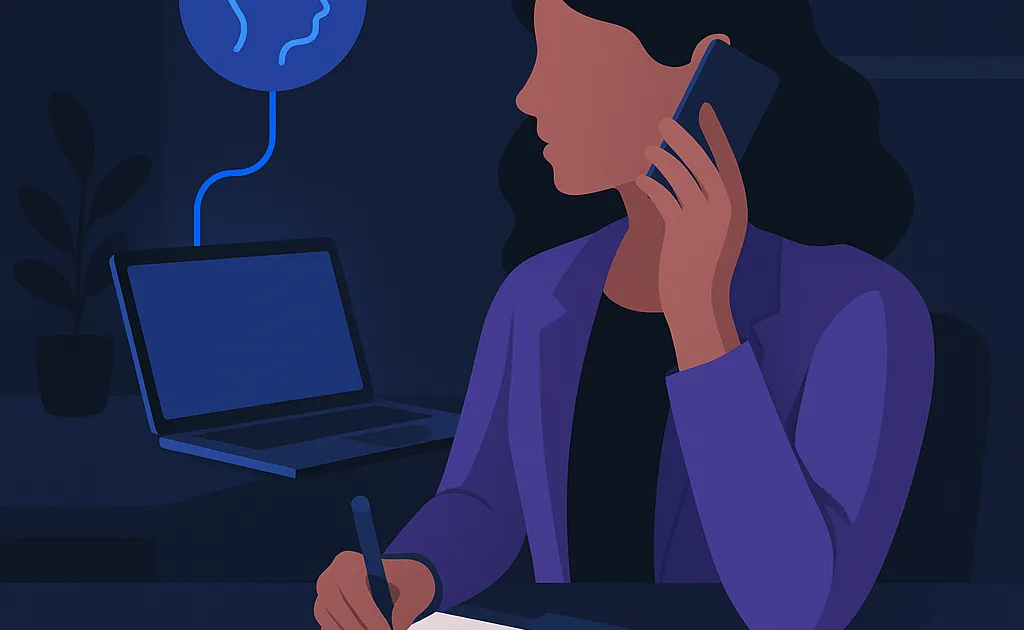
A phone interview — also called a phone screen — is typically the first live interaction in a hiring process, lasting 15 to 30 minutes, where a recruiter or hiring manager evaluates your basic qualifications, communication skills, and interest in the role before advancing you to more intensive rounds. Phone screens are unique because they rely entirely on verbal communication with no visual cues, making preparation for tone, pacing, and concise delivery especially critical. AissenceAI can assist during phone interviews by capturing the call audio through your computer's audio system and generating real-time response suggestions, giving you the same AI-powered advantage that video interview candidates enjoy — provided you route your phone audio through your computer or use a computer-based calling setup.

How to Capture Phone Audio for AI Processing

To use AissenceAI during a phone screen, you need the audio flowing through your computer:

  • Computer-based calling — Use your phone's companion app on your computer (iPhone with Mac, or phone apps with Windows) so audio routes through the computer natively
  • Speakerphone method — Place the phone on speaker near your computer's microphone. Less ideal but functional for quieter environments
  • Audio cable routing — Use a 3.5mm cable to route phone audio directly into your computer's line-in port for the cleanest capture

Once audio is flowing through your computer, the AissenceAI desktop app captures it the same way it handles video call audio.

Common Phone Screen Questions

Phone screens follow predictable patterns. Prepare concise answers for these categories:

  • Background overview"Tell me about yourself" (keep to 60-90 seconds on the phone)
  • Interest in the role — "Why are you interested in this position?"
  • Current situation — "Why are you looking to leave your current role?"
  • Salary expectations — Have a researched range ready. See salary negotiation strategies
  • Availability — Start date and scheduling for next rounds

Phone Interview Best Practices

  • Stand up while talking — it improves vocal energy and projection
  • Keep your resume and notes visible (the AI overlay handles this automatically)
  • Smile while speaking — it audibly affects your tone
  • Use a quiet, private space with no interruptions
  • Have the job description open for reference

Preparation Timeline

Follow the interview preparation checklist starting at least 48 hours before your phone screen. Run a mock interview focused on phone screen questions. Test your audio routing setup to ensure AissenceAI captures the phone audio clearly. On the day, launch the AI copilot five minutes before the scheduled call time to ensure everything is ready.

Mastering the Full Spectrum of Interview Types

Modern job interviews have evolved far beyond the simple question-and-answer format of previous generations. Today's comprehensive interview processes test candidates across multiple dimensions: technical knowledge, behavioral competencies, communication effectiveness, and cultural alignment. Understanding what each interview type tests — and how to demonstrate the specific qualities interviewers are looking for — is the difference between consistently getting offers and consistently falling short in the final rounds.

According to LinkedIn's 2025 Global Talent Trends report, 76% of hiring decisions are made within the first 15 minutes of an interview. This means your preparation must focus not only on having the right answers but on delivering them with the confidence and structure that creates a strong first impression.

The STAR Method: Your Foundation for Interview Success

Every compelling interview answer follows a structure that allows interviewers to evaluate your experience efficiently. The STAR method (Situation, Task, Action, Result) is the universal framework for behavioral interview questions and is increasingly used as a quality signal in technical explanations as well.

  • Situation: Set the scene with enough context for the interviewer to understand the stakes. Keep this brief — 1-2 sentences maximum. The interviewer wants to hear about what YOU did, not extensive background.
  • Task: Clarify your specific responsibility. What were you accountable for? What was your role vs. your team's role?
  • Action: The heart of your answer. Describe what YOU specifically did, in detail. Use "I" not "we." This is where interviewers evaluate judgment, initiative, and skills.
  • Result: Quantify the outcome. Numbers are critical: percentages, dollar amounts, time savings, team size, user count. Generic outcomes ("the project was successful") are weak. Specific outcomes ("revenue increased by $1.2M over 6 months") are powerful.

Building Your Story Bank

Top candidates do not improvise interview answers — they draw from a prepared library of 8-10 stories that can be adapted to any interview question. Each story should be significant enough to demonstrate multiple competencies and recent enough to be relevant (within the last 3-5 years).

Essential Story Categories

CategoryExample QuestionWhat It Tests
Leadership without authorityTell me about a time you influenced without formal powerCommunication, persuasion, collaboration
Failure and recoveryTell me about a significant mistake you madeSelf-awareness, accountability, learning
Conflict resolutionDescribe a time you had a difficult team relationshipEmotional intelligence, maturity
AmbiguityTell me about a time with unclear requirementsDecision-making, judgment
InnovationDescribe a creative solution to a difficult problemProblem-solving, creativity
PrioritizationHow did you handle multiple competing priorities?Time management, judgment
Technical achievementWhat's the most technically complex thing you've built?Technical depth, communication
Stakeholder managementTell me about a difficult stakeholder relationshipCommunication, empathy

The 5 Questions to Ask at the End of Every Interview

"Do you have questions for us?" is not just a formality — it is your final opportunity to demonstrate intellectual curiosity, strategic thinking, and genuine interest. Not asking questions ranks #3 on the list of behaviors that cause interviewers to rate candidates negatively (LinkedIn research).

  1. "What does success look like in this role in the first 90 days?" (Shows planning and results orientation)
  2. "What's the biggest challenge the team is currently facing that I'd be helping to solve?" (Shows problem-solving mindset)
  3. "How would you describe the team's decision-making culture?" (Shows interest in how the team operates)
  4. "What do people who excel in this role have in common?" (Shows self-awareness and desire to succeed)
  5. "What excites you most about where the company is heading?" (Shows enthusiasm and long-term thinking)

How to Handle Difficult or Unexpected Questions

Even the most prepared candidates encounter questions they haven't anticipated. The key is having a strategy for buying time and structuring a coherent answer under pressure. Use these techniques:

  • The pause: "That's a great question — let me think about that for a moment." A 5-10 second pause to collect your thoughts is completely acceptable and signals thoughtfulness, not weakness.
  • Clarification: "Just to make sure I understand what you're looking for — are you asking about [interpretation A] or [interpretation B]?"
  • Think out loud: If you don't have a prepared answer, walk through your reasoning: "I haven't faced this exact situation, but here's how I would approach it..."
  • Acknowledge limits: "I don't have direct experience with X, but in my experience with [related area], I would..."

Interview Day Checklist

  • ☐ Research: company news, interviewer LinkedIn, glassdoor interview questions
  • ☐ Tech setup: test Zoom/Meet video and audio 30 minutes before
  • ☐ Environment: clean background, good lighting, neutral background
  • ☐ Materials: notebook for notes, copy of your resume on screen
  • ☐ AissenceAI: configure and test the desktop app if using live assistance
  • ☐ Questions: prepare 5+ specific questions for each interviewer
  • ☐ Mindset: practice power poses or mindfulness for 10 minutes beforehand

After the Interview: Maximizing Your Chances

Send a personalized thank-you email to each interviewer within 24 hours. Reference a specific topic from your conversation to demonstrate engagement. Keep it brief (3-5 sentences) and end with a clear statement of continued interest. This simple step is skipped by 60% of candidates and noticed by nearly all hiring managers.

Frequently Asked Questions

How do I stop being nervous in interviews?

Nervousness is primarily caused by uncertainty. The antidote is preparation: the more scenarios you've practiced with AI mock interviews, the more familiar and manageable the actual interview feels. Physiological techniques also help: 4-7-8 breathing (inhale 4 counts, hold 7, exhale 8) reduces cortisol within 2-3 minutes.

Is it okay to use notes during a video interview?

Brief glances at notes are acceptable in video interviews — keep them minimal and at eye level to avoid obviously looking down. AissenceAI's stealth overlay eliminates the need for notes entirely by displaying suggestions directly on screen in a format invisible to the interviewer.

How do I answer questions about salary expectations?

Deflect until you have an offer: "I'm focused on finding the right fit. I'm confident we'll agree on fair compensation once we determine I'm the right candidate." If pressed, give a range with the low end at your actual target. See salary expectations guide for scripts.

Practice Makes Permanent

The single most effective interview preparation activity is structured mock interview practice with feedback. Use AissenceAI's mock interview platform for unlimited sessions across all interview types. For real-time live interview assistance, the AissenceAI desktop app provides 116ms response AI guidance invisible to interviewers. See STAR method examples for story templates.

Share:
#InterviewTips#InterviewPrep#CareerGrowth