AI Interview Coaching: Benefits & Impact
632 words · Reviewed for accuracy
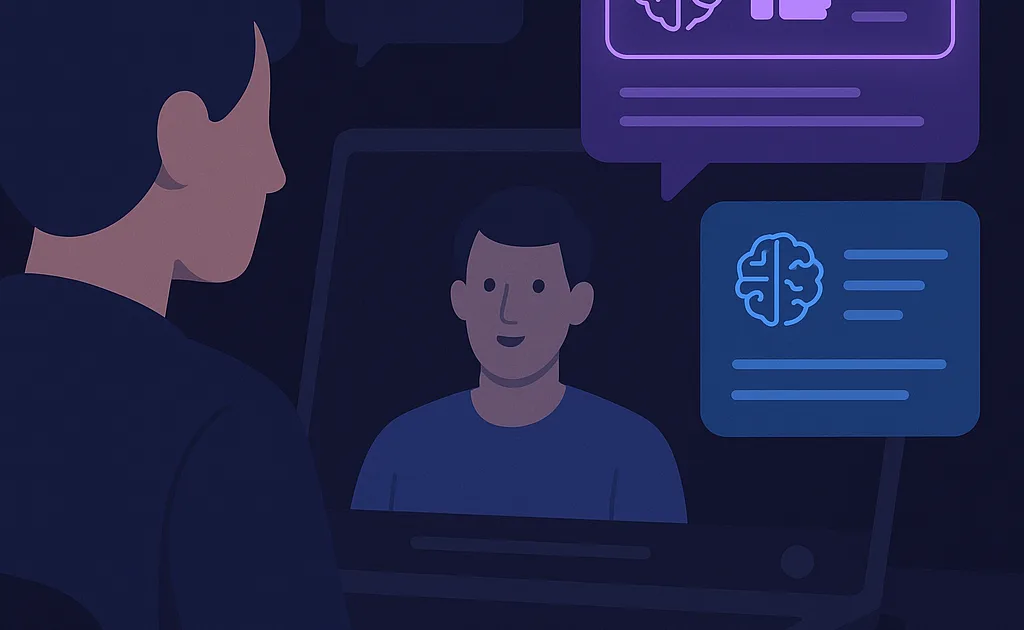
The core benefit of AI interview coaching is repetition with feedback: you can practise a hard question ten times before breakfast, hear exactly where your answer sagged, and try again — something no human coach, however good, can offer at that volume or that hour. Everything else flows from that.
The key idea: interview performance is a trained skill, and skills respond to deliberate practice — reps, feedback, correction. AI coaching lowers the cost of a single rep to almost nothing, which changes how much practice a normal person can realistically do.
That's the honest case. Now let me make it properly — including where the benefits stop.
Where the benefits are real
- Volume. A human coach gives you an hour a week. An AI gives you an hour a day, if you want it. Fluency comes from reps.
- Instant, specific feedback. "Your answer had no measurable outcome" at 11pm, while it's still fresh, beats a note three days later.
- A safe place to be bad. Nobody is watching. You can fumble, restart, and experiment with phrasing without embarrassment — and that psychological safety makes people practise more.
- Consistency. The rubric doesn't have an off day. Your tenth session is scored like your first, so progress is actually measurable.
Where AI coaching falls short
Be sceptical of any tool that claims otherwise. An AI can't read the politics of a specific company, can't replicate the weird energy of a particular stressed hiring manager, and can't give you the accountability of a person who'll notice you skipped this week's practice. For senior roles with case studies and panel dynamics, a human perspective still adds something. We weigh the trade-off properly in coaching vs AI tools.
A simple weekly practice framework
- Two mock sessions at target-role difficulty. Treat them as real: camera on, out loud, no pausing.
- One review block. Read the transcript. Rewrite your two weakest answers — in writing, so the structure sticks.
- One stretch session. A question type you dread. Case question? "Tell me about a failure"? Go straight at it.
Four focused hours a week for a month will do more than a frantic weekend ever has.
One more thing about why this works: feedback timing changes behaviour. When the note arrives while the answer is still warm in your memory, the correction attaches to the actual moment — "ah, that's where I drifted." Feedback delivered days later attaches to a vague recollection, and vague corrections produce vague improvement. It's the same reason musicians record rehearsals instead of relying on how the performance felt.
Mistakes that waste the tool
- Practising only questions you're already good at — comfortable reps don't grow anything.
- Reading feedback once and never re-answering the question. The rewrite is where the learning lives.
- Treating the score as a verdict instead of a diagnostic. A weak score on Tuesday is a to-do list, not a judgement.
FAQ
How quickly will I see improvement? Most people feel a difference in answer structure within a handful of sessions; confidence takes a few weeks of consistent reps. Anyone promising overnight transformation is selling something.
Is it worth paying for? Compare it honestly against the alternatives — a single human coaching session often costs more than a month of an AI tool. Check current pricing and decide for your budget.
Start with guided mock interviews and build from there.
A last honest note on expectations: coaching tools amplify effort, they don't replace it. The candidates who improve are the ones who show up on the days they don't feel like it, review the sessions that went badly, and rewrite the answers they'd rather forget. The tool makes each of those reps cheap and available; you still have to do them. Fortunately, that's the only part that was ever hard.